A dog’s paw can look minor, yet a small cut may become painful during walking. Moisture, grit, and repeated licking can quickly complicate basic protection. This guide explains How to wrap a dog's paw with self-adherent wrap safely, clearly, and with realistic limits. It focuses on pressure control, clean materials, and frequent checks. The wrap should support a temporary dressing, not replace veterinary assessment.
The American Pet Products Association’s 2023–2024 National Pet Owners Survey reported that 66% of U.S. households owned a pet. Its industry data also recorded approximately $147 billion in U.S. pet spending during 2023. These figures reflect growing attention to practical home-care products, including canine wound-protection supplies. However, popularity does not prove safety. A self-adherent bandage can become too tight, especially after swelling develops. Veterinary guidance from organizations such as the American Animal Hospital Association emphasizes monitoring pain, circulation, and infection signs during home care. Watch the toes. Check them often.
A suitable wrap should feel secure without squeezing the paw. It must never cover a serious wound without professional advice. Some instructions online appear simple, but real paws are irregular, hairy, and easily irritated. I also acknowledge an uncomfortable detail: even careful wrapping can fail when a dog chews, limps, or hides discomfort. This introduction therefore treats technique as a starting point, not a guarantee. Clean preparation, gentle tension, and timely veterinary help remain more important than any brand, origin, or product claim.
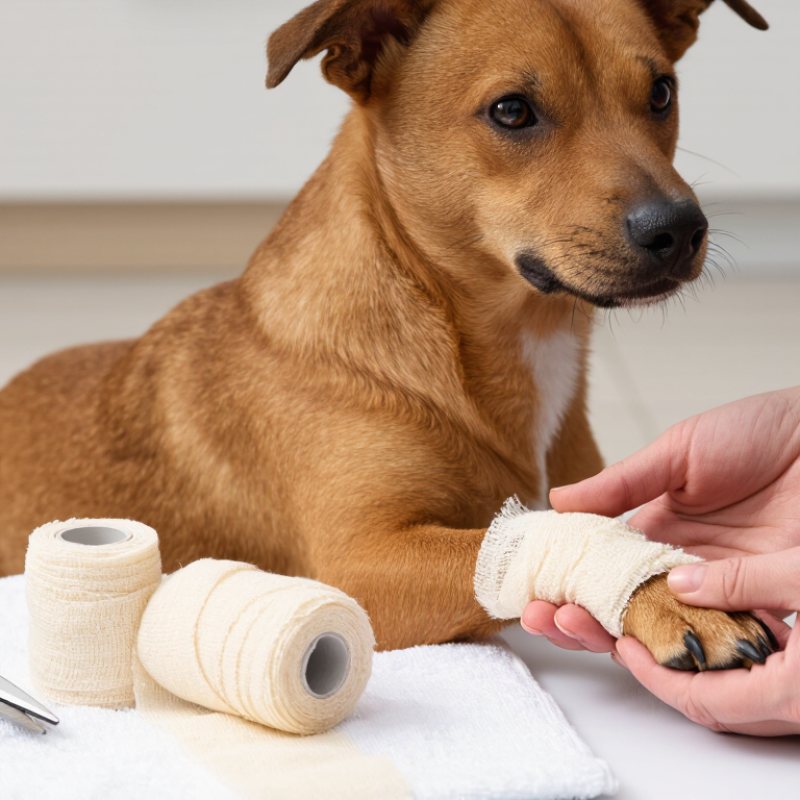
Self-adherent wrap is useful when a dog has a small, clean paw wound or needs protection after veterinary treatment. It can hold gauze in place and reduce licking during short periods. The wound should not be actively bleeding, deeply cut, badly swollen, or filled with a foreign object. Those cases need prompt veterinary care.
Place clean gauze between the toes before wrapping. Start near the toes and move upward toward the ankle, overlapping each layer by about half its width. Keep the material smooth, not stretched tightly. Two fingers should fit beneath the finished wrap. Check the toes after fifteen minutes, then inspect them several times daily. Cold, pale, blue, swollen, or painful toes mean the wrap is too tight. Remove it promptly and contact a veterinarian.
Keep the bandage dry and replace it as directed, often daily. Wet grass can loosen it quickly. A loose wrap can slip; a tight wrap can restrict circulation. That balance is easy to miss. Dogs may also chew through the covering, even when it looks secure. Use a protective collar if needed, and limit running until the paw improves. If swelling, odor, discharge, worsening pain, or persistent limping appears, home wrapping is no longer enough.
Before wrapping a dog’s paw, prepare a clean, quiet space. Gather sterile gauze, saline, non-stick dressing, self-adherent wrap, blunt scissors, disposable gloves, and a towel. Keep treats nearby. The towel can gently steady a nervous dog without forcing the leg. The American Pet Products Association’s 2023–2024 National Pet Owners Survey counted 65.1 million U.S. dog-owning households. That figure shows how often basic paw care may be needed, but home wrapping is not veterinary treatment.
Rinse visible dirt with sterile saline, then pat the paw completely dry. Check between the toes for glass, thorns, bleeding, heat, or unusual swelling. Do not wrap a deep wound, crushed nail, suspected fracture, or heavily bleeding paw without veterinary advice. Place a non-stick pad over the injury. Add gauze around the paw, including between the toes, but avoid bulky layers. Self-adherent wrap should feel secure, never tight. The Merck Veterinary Manual advises frequent bandage checks for swelling, odor, moisture, slipping, and circulation changes. Compare both paws. Cold toes need urgent attention.
Tips: Prepare everything before touching the paw. Wrap from the toes upward, leaving toe tips visible when possible. Check the wrap after ten minutes, then again several times daily. Replace it if wet or dirty. A dog may chew it off, despite careful work. That is normal frustration, not failure. Seek veterinary care if pain increases, the dog will not bear weight, or the paw smells unpleasant.
Before wrapping a dog's paw, prepare one clean water or saline source, sterile gauze, one roll of self-adherent wrap, blunt-tip scissors, and a clean towel or absorbent pad. Clean and dry the paw first, and make sure the wrap is snug but not tight. Check the toes regularly for swelling, coldness, discoloration, or discomfort, and seek veterinary advice for deep wounds, persistent bleeding, or suspected fractures.
A dog’s paw injury needs clean, calm handling before wrapping. The 2023–2024 APPA National Pet Owners Survey reports 65.1 million U.S. households own dogs. Small wounds affect many families, yet home care still has limits. Rinse the paw with clean lukewarm water or sterile saline. Remove visible dirt gently. Do not pull out glass, thorns, or embedded objects. Avoid hydrogen peroxide and alcohol, which can damage healing tissue. Pat the paw completely dry, especially between the toes.
Place a non-stick dressing over the injury. Add soft padding around the paw, then apply self-adherent wrap with light, even pressure. It should never cover the entire ankle tightly. Two fingers should slide beneath the wrap. Check the toes every few hours for swelling, coolness, discoloration, or unusual pain. A neat wrap can still be dangerous. Change it immediately when wet, dirty, loose, or smelly. Prevent licking with supervision or a protective collar. The NAPHIA 2024 State of the Industry Report recorded about 5.07 million insured pets in North America in 2023, reflecting growing attention to veterinary care. Seek professional help for deep cuts, persistent bleeding, missing skin, severe limping, pus, or suspected fractures. My practical caution is simple: cleaning is useful, but delaying examination is not.
With 65.1 million U.S. households owning dogs, according to the APPA 2023–2024 National Pet Owners Survey, paw injuries are common home-care concerns. AVMA data also reports about 59.5 million dog-owning households. Still, a wrap is temporary support, not complete treatment.
Start by checking the paw in bright light. Stop active bleeding with gentle pressure. Rinse surface dirt with sterile saline, then pat the area dry. Place a clean, non-stick pad over the wound. Do not put self-adherent wrap directly on broken skin. Begin below the ankle and move toward the toes, covering half of each previous layer. Keep the tension light. Two fingers should slide beneath the wrap. Too tight is dangerous. Check the toes after ten minutes. They should stay warm, normally colored, and free from swelling. Remove the wrap immediately if the dog shows pain, chewing, numbness, or cold toes. Replace it when wet or dirty, and prevent licking with supervision. I still see one preventable mistake: wrapping faster than checking circulation. Deep cuts, punctures, bites, persistent bleeding, or a painful limp need veterinary assessment. Even a neat wrap can hide infection, so reassess the paw several times daily.
The APPA 2023–2024 National Pet Owners Survey estimated 65.1 million U.S. households owned dogs. Many owners may manage minor paw protection at home. However, a wrap must never replace veterinary assessment. Check the paw within 30 minutes, then inspect it at least twice daily. Look between the toes. They should stay warm, pink, and normally shaped. Swelling, cold skin, pale or blue toes, unusual odor, wetness, or renewed bleeding means remove the wrap and contact a veterinarian.
Keep checks simple. Touch the toes gently and compare them with the opposite paw. A healthy wrap feels secure, not tight. Your dog should walk without increasing lameness. Change the wrap immediately if it becomes damp, dirty, loose, or chewed. Prepare clean gauze and a dry surface first. Do not pull contaminated material across an open wound. A common mistake is judging success by appearance. Neat is not the same as safe.
Remove the wrap slowly. Unwind self-adherent material instead of cutting close to the skin. If scissors are necessary, use blunt-ended scissors and protect the paw with your fingers. Stop if the material sticks to a wound. Persistent bleeding, deep cuts, embedded objects, severe pain, or repeated chewing requires professional care. Merck Veterinary Manual emphasizes regular bandage monitoring because circulation problems can develop unnoticed. I would also reassess the fit after every walk. Paw movement changes quickly, and my earlier wrap may have been too tight.
Prepare sterile gauze, saline, a non-stick dressing, self-adherent wrap, blunt scissors, gloves, a towel, and treats. Keep everything nearby. A quiet room helps.
Rinse visible dirt with lukewarm water or sterile saline. Pat the paw completely dry, especially between the toes. Avoid alcohol and hydrogen peroxide.
Do not pull out embedded glass, thorns, or other objects. Cover the area lightly and seek veterinary advice. I might miss a small fragment.
Cover the injury with a non-stick dressing. Add soft padding around the paw, including between the toes. Wrap upward with light, even pressure.
The wrap should feel secure, never tight. Two fingers should slide beneath it. Leave toe tips visible when possible. Cold toes need urgent attention.
Check it after ten minutes, then several times daily. Look for swelling, coolness, discoloration, moisture, odor, slipping, or increased pain.
Replace it immediately if it becomes wet, dirty, loose, or smelly. A clean-looking wrap can still cause problems. Check between the toes carefully.
Seek veterinary help for deep cuts, heavy bleeding, missing skin, severe limping, pus, suspected fractures, or worsening pain. Do not delay examination.
Learning how to wrap a dog's paw with self-adherent wrap can help protect a minor, clean injury from dirt, moisture, and excessive licking. Before beginning, prepare clean water or saline, soft gauze, pet-safe antiseptic recommended by a veterinarian, scissors, and the wrap. Gently examine the paw for swelling, bleeding, foreign objects, or signs of serious injury. Clean the area carefully, dry it thoroughly, and place a nonstick dressing over the wound without applying medication unless professionally advised.
Apply the self-adherent wrap from just above the paw, moving downward with light, even tension and leaving the toes visible when possible. The wrap should stay secure but never feel tight, as restricted circulation can cause harm. Check the paw frequently for swelling, coldness, color changes, odor, or increased discomfort, and replace the covering whenever it becomes wet or dirty. Remove it slowly with scissors, avoiding the skin, and seek veterinary care if the injury is deep, worsening, or not improving.

NuCure Medical